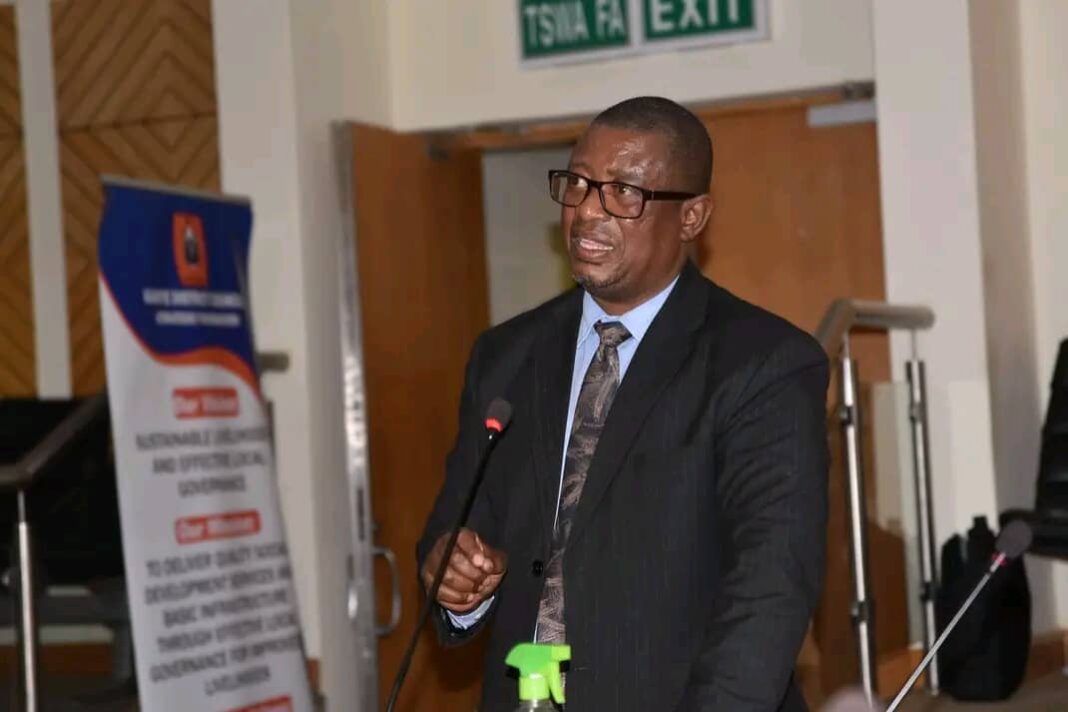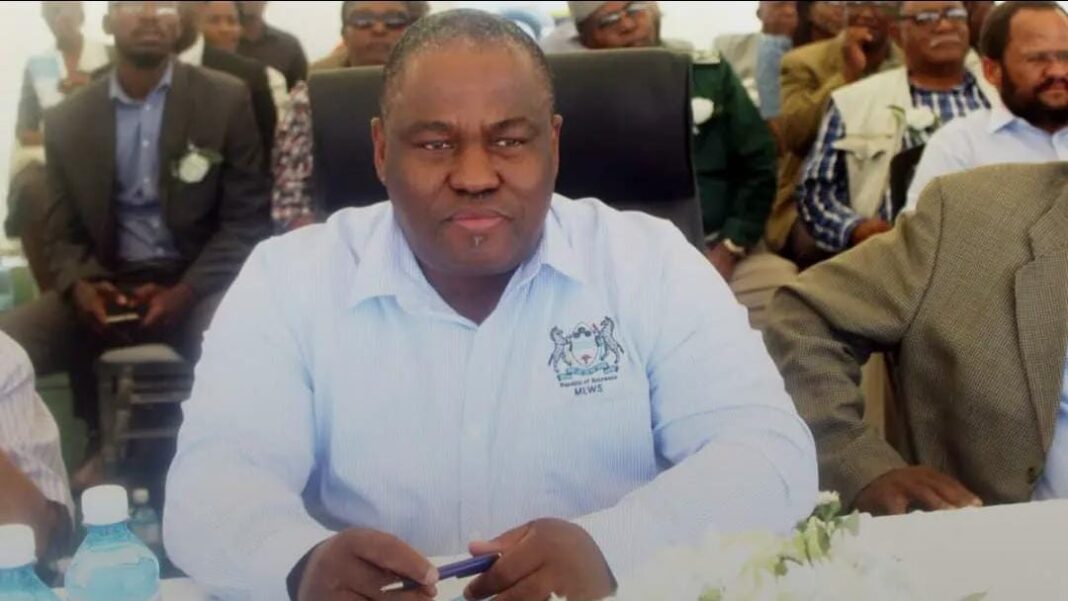

The narrative surrounding the high-profile asset forfeiture case against former Minister Kefentse Mzwinila took a sharp turn today, as opposing court papers obtained by this publication reveal a defiant defence against the state’s allegations of corruption and flight.
As legal teams square off in the High Court today, the newly available documents offer the first glimpse into Mzwinila’s side of the story. Far from the image of a fugitive fleeing “bad weather” painted by the Directorate of Public Prosecutions (DPP), Mzwinila portrays himself as a victim of a politically motivated “Christmas Eve ambush,” insisting his absence is due to urgent spinal surgery, not a desire to escape justice.
The “Fleeing” Narrative vs. Medical Reality
The state’s urgent application, filed late last year, hinged heavily on the claim that Mzwinila and his wife, Bridget, had absconded to South Africa to avoid investigation, using a ruse about flooding at their Oodi residence to slip away.
In his answering affidavit, Mzwinila dismisses this version of events as a “deliberate fabrication.” He states categorically that his travel to South Africa was for a long-scheduled medical procedure—specifically a lumbar fusion spinal surgery—and a holiday for his children.
“I have not fled the country,” Mzwinila asserts in the filings. He argues that his attorneys had explicitly informed the investigators of his medical travel plans. He accuses the DPP of “material non-disclosure,” alleging they conveniently withheld this information from the court to secure the interim freezing order by painting him as a flight risk.
Follow the Money: Loans or Loot?
The core of the DPP’s case is the allegation of “unexplained wealth”—vast cash purchases of farms, homes, and heavy machinery that investigators claim do not match the couple’s known income.
Mzwinila’s defence strikes at the heart of this claim, arguing that the state performed a “shoddy” investigation that ignored obvious paper trails. Where the state sees illicit cash, Mzwinila points to bank loans. He reveals that his farming operations and developments were heavily financed by legitimate institutions, citing a massive P6.2 million loan from CEDA and further financing from the National Development Bank (NDB) and ABSA.
While he admits to handling cash—which he notes is not a crime in itself—he contends these funds were generated through the lawful operations of his private practice, Psychologists Botswana, and legitimate cattle sales. He argues that the state has conflated valid business turnover with “money laundering”.
Tractors, Tenders, and “Gifts”
The state’s most damaging allegation links the couple’s heavy machinery to Chinese contractors who won government water tenders during Mzwinila’s tenure as Minister. The DPP suggests these items were kickbacks.
Mzwinila rubbishes this link, asserting that the machinery, including the contested tractors and dairy equipment, was acquired for genuine farming purposes. He denies receiving them as corrupt “gifts,” maintaining they were either purchased or financed through his businesses to support his dairy and agricultural projects.
Regarding the movement of furniture and equipment to South Africa—which the state branded as “dissipation” or hiding assets—Mzwinila offers a domestic explanation. He claims the items were moved to furnish a temporary residence in South Africa where the family is staying during his post-operative recovery, ensuring his children could be with him during the school holidays.
A “Christmas Ambush”? The Legal Arguments
Beyond the factual rebuttals, Mzwinila’s legal team has raised significant procedural objections, asking the court to dismiss the case on technical grounds.
They argue that the state abused the court process by creating “self-induced urgency.” Mzwinila points out that investigators claim to have known about the asset movements in September and his travel in November. Yet, they waited until December 24th—Christmas Eve—to launch an urgent ex parte application when courts are skeleton-staffed and lawyers are on break .
“There was no emergency,” the affidavit contends, framing the timing as a tactical maneuver to ambush the defence. Furthermore, Mzwinila challenges the jurisdiction of the court and the manner in which the papers were served, arguing that leaving them with a domestic helper or gardener was legally insufficient.
The Court Decides
The contrast between the two sets of papers could not be starker.
The State says: The Mzwinilas are fugitives hiding assets bought with unexplained cash.
Mzwinila says: He is a patient recovering from surgery, his assets are financed by bank loans, and the “flight” is a fiction created by the state.
As the matter proceeds in the High Court today, the judiciary holds the ultimate power to determine the truth. The court must now weigh whether the state’s “reasonable suspicion” is strong enough to maintain the freeze on the Mzwinilas’ estate, or if the former Minister’s explanation of loans and medical necessity is sufficient to unlock his assets.
This publication will continue to report on the proceedings as they unfold.