
Keolebogile Lebo Diswai
Every national development plan is a promise about the future. It tells citizens what kind of economy the country wants to build, what sectors will drive growth, and what investments will shape the lives of the next generation. But plans alone do not transform nations. Budgets do.
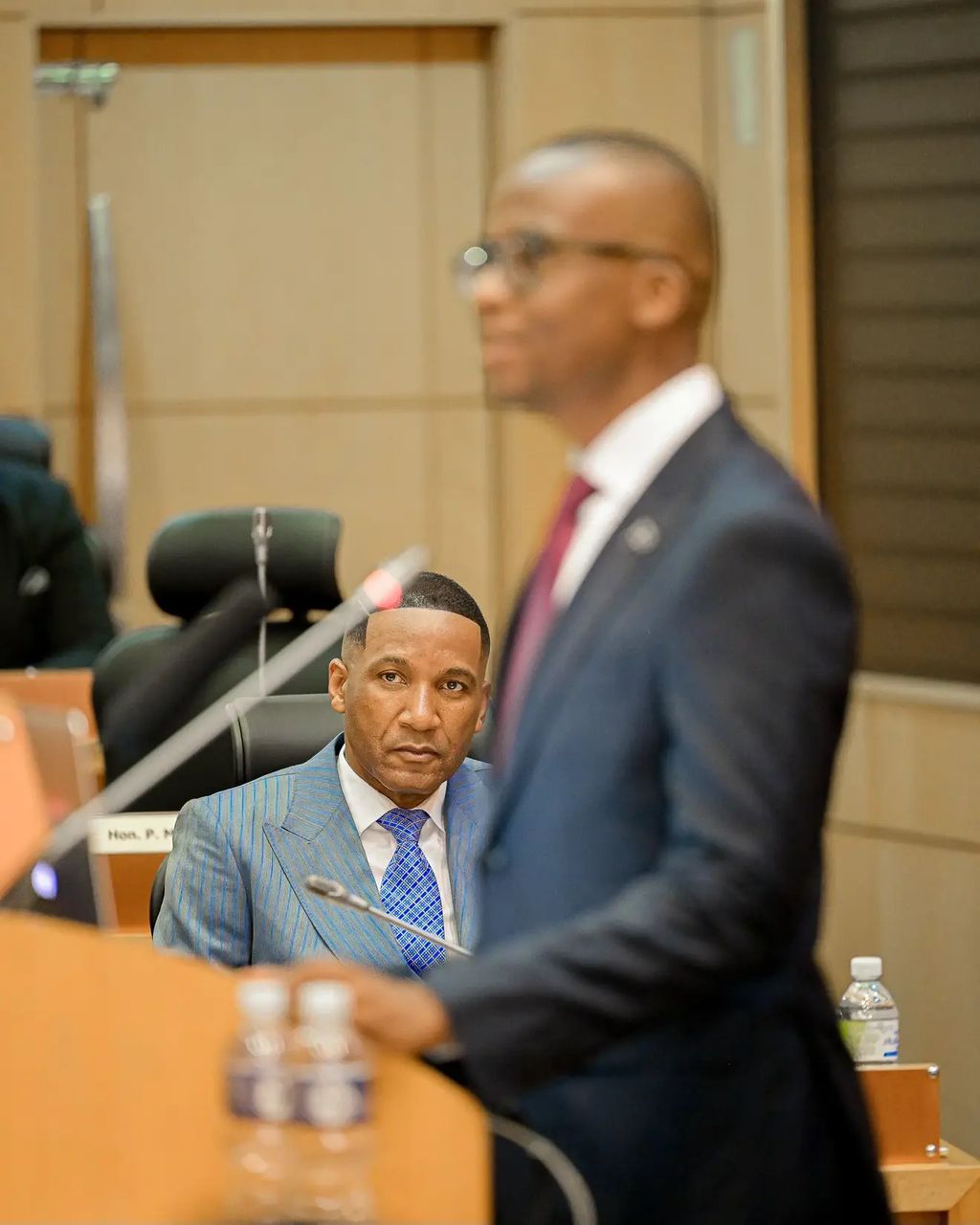
This year’s national budget, delivered by Vice President and Minister of Finance Ndaba Nkosinathi Gaolathe, is therefore more than a fiscal statement. It is an early test of whether Botswana is beginning to fund the transformation envisioned in the Twelfth National Development Plan (NDP12).
The real measure of NDP12 is not in its language or ambitions, but in the numbers contained in the annual budget. The 2026/27 Budget is an indicator of whether the country is truly aligning its resources with its long-term development priorities.
At a strategic level, the budget moves in the right direction. But a closer look reveals both encouraging signals and notable gaps.
A budget anchored in infrastructure, energy, and fiscal discipline
The development budget for 2026/27 stands at P23.38 billion, with major allocations going to the foundations of economic growth. The Minerals and Energy sector receives P5.23 billion, while Transport and Infrastructure is allocated P3.86 billion. Together, these sectors account for a substantial share of development spending, reflecting a clear focus on fixing the fundamentals of the economy.
There is also a specific allocation of P1.85 billion for the rehabilitation and maintenance of public infrastructure, including schools, health facilities, roads, and utilities. This is not a minor administrative adjustment. It is one of the most important interventions in the budget.
The emphasis on maintenance marks an important shift in public spending philosophy. For many years, government investment leaned heavily toward new construction while existing infrastructure deteriorated. Prioritising maintenance reflects a more mature and fiscally responsible approach, one that seeks to preserve value, improve service delivery, and avoid the far higher costs of full reconstruction later.
Health reform and the path to universal coverage
The budget also signals important movement in the health sector, which remains central to both human capital development and social equity. The Ministry of Health has been allocated the fourth-largest share of the proposed budget, amounting to P7.51 billion, underscoring the urgency of stabilising and reforming public healthcare.
This allocation is expected to cover essential sector requirements, including the procurement of drugs, vaccines, laboratory supplies, and medical and surgical equipment. After a period marked by medicine shortages, operational breakdowns, and declining public confidence, this investment is not optional, it is foundational. A health system that cannot reliably provide basic medicines or functioning equipment cannot support productivity, learning, or economic growth. Health spending is therefore not just social spending; it is an economic investment.
Equally significant is the government’s intention to modernise the Central Medical Stores (CMS), which has been at the centre of many of the supply chain failures. The legislative process to strengthen the governance and operating model of the CMS is expected to commence before the end of the financial year. This reform is long overdue. Without fixing procurement systems, governance structures, and accountability mechanisms, additional funding alone will not translate into better services. Botswana’s health crisis has not been only about money, it has also been about systems, leadership, and oversight.
These steps form part of the government’s longer-term strategy to achieve Universal Health Coverage, ensuring that all Batswana have equitable access to quality healthcare services without suffering financial hardship. This is the right strategic direction. But universal coverage will only be meaningful if the underlying delivery systems are credible, responsive, and well-governed.
In the broader context of NDP12, the increased allocation and CMS reforms represent a necessary alignment between the development plan’s health system transformation agenda and the immediate priorities of the national budget. The real test, however, will be whether these reforms are implemented with urgency and discipline. Restoring medicines, staffing clinics, fixing infrastructure, and rebuilding trust in the system are not long-term aspirations; they are immediate national priorities.
Maintenance is not a luxury; it is a necessity
Botswana is facing a growing crisis of deteriorating public infrastructure, particularly in schools and health facilities. These are legacy issues. Across the country, many schools are struggling with crumbling classrooms, overcrowded learning spaces, broken sanitation facilities, and severe shortages of basic teaching resources. In such conditions, education reforms and skills strategies cannot succeed. Infrastructure is the foundation of learning.
The situation is equally concerning in the health sector. Just days before the budget discussions, the Office of the Ombudsman released findings from an investigation into the healthcare crisis affecting public facilities. The inquiry found that the problems at Princess Marina Hospital were not isolated, but symptomatic of wider systemic failures across the public health system. It highlighted ambulance shortages, staffing deficits, medicine stockouts, weak governance, and deteriorating infrastructure. The Ministry of Health itself acknowledged deficiencies in capacity, competency, and governance, noting that these failures had contributed to violations of the right to health.
In this context, the P1.85 billion maintenance allocation is not simply a line item. It is a necessary intervention in sectors where physical decay has begun to undermine service delivery and public trust.
Signs of fiscal discipline and administrative reform
Another notable development in the budget is the reported reduction in monthly government expenditure. Spending has dropped from P1.14 billion per month to P584 million, representing a 49 percent reduction. This shift is attributed largely to efforts to curb fiscal leakages and improve expenditure controls.
If sustained, this signals a serious attempt to restore fiscal discipline. In a context of tightening revenues and rising development needs, efficiency in public spending is just as important as the size of the budget itself.
The budget also signals a broader shift toward administrative and structural reform. The emphasis on reducing waste, improving procurement discipline, and tightening financial controls suggests an awareness that transformation requires not only new investments but also a more efficient state.
Structural reforms and new financing models
The move toward unbundling the Botswana Power Corporation represents one of the most consequential structural reforms in the budget. By separating generation, transmission, and distribution, the reform could improve efficiency, attract private investment, and ultimately reduce the cost of electricity. In the long term, this could unlock growth in manufacturing, mining, and digital industries that depend on reliable and affordable power.
The use of Public-Private Partnerships to finance portions of infrastructure is another positive development. With fiscal space constrained, PPPs provide a pragmatic way to mobilize private capital, accelerate project delivery, and reduce pressure on the public balance sheet. This signals a shift toward a more collaborative model of development, where the private sector plays a larger role in financing and delivering strategic infrastructure.
Human capital and skills alignment
The continued emphasis on education reform and TVET revitalisation is another area of alignment with NDP12. The budget signals efforts to align training with industry demand and embed graduates into practical government maintenance and fleet operations. This reflects a growing recognition that skills development must be tied directly to real economic activity.
Programmes such as Ikageng Public Works, previously known as Ipelegeng, are also being repositioned as performance-driven initiatives aimed particularly at youth and women, linking remuneration to productivity and market-relevant skills. This represents a shift away from purely welfare-based programmes toward more empowerment-oriented approaches.
Another positive development is the introduction of Project Bula Buka, a new educational initiative for out-of-school learners highlighted in both the 2026/27 Budget Speech and NDP12. The programme is designed as a pilot intervention to address gaps in the educational journey of young Batswana who have fallen out of the formal education system.
Its core objective is to expand access to education while providing skills-oriented pathways for young people. It specifically targets out-of-school Junior Certificate leavers, offering them a second chance to re-enter structured learning while building character and practical competencies. It also provides remediation opportunities for Botswana General Certificate of Secondary Education leavers who need to improve their results or acquire additional skills.
In a country grappling with high youth unemployment and a significant number of young people outside education, employment, or training, such second-chance programmes are essential. If properly implemented and scaled, initiatives like Project Bula Buka could help close the gap between early school exit and meaningful participation in the economy, reinforcing the broader human capital ambitions of NDP12.
Positive signals in agriculture and traditional sectors
The agricultural sector also provides an example of how targeted reforms can produce tangible results. The Botswana Meat Commission has cleared P698 million in arrears as part of its turnaround strategy, and reforms have reportedly delivered a 31 percent increase in revenue.
This stabilisation is significant for the beef value chain, one of Botswana’s most important agricultural export sectors. It also supports President Advocate Duma Boko’s ambition to increase the cattle herd from approximately 1.7 million to 5 million by 2030, a move that could transform rural livelihoods and expand export earnings.
Youth, gender equality, and the GBV gap
Both NDP12 and the 2026/27 Budget Speech recognise the importance of youth empowerment and gender equality. The budget acknowledges that young people bear the heaviest burden of unemployment and signals a shift toward skill-based empowerment.
However, a gap emerges when comparing the budget to the specific projects outlined in NDP12. Initiatives such as youth mental health programmes, GBV safe havens, and gender-focused digital systems are not clearly visible as immediate budget priorities, despite the rising cases of GBV as well as technology-facilitated GBV.
While some gender-related initiatives are mentioned, the overall scale of funding appears limited compared to the ambitions set out in NDP12.
The creative economy and youth entrepreneurship
Another area that deserves closer attention is the creative and informal enterprise economy. While the budget does not single out the creative industries as a standalone sector, it does propose a significant P1.31 billion allocation for MSME financing across various programmes in the 2026/27 financial year. This is an important signal, as many creatives, artisans, and small-scale entrepreneurs operate within the MSME space.
However, even the budget acknowledges that this level of funding remains insufficient to address the diverse and often complex needs of the sector. The current financing model has been heavily reliant on direct lending, collateral-based credit, and administratively heavy public schemes. According to a recent World Bank study under the Botswana Financial Sector Development Strategy, this approach has unintentionally crowded out many entrepreneurs, innovators, disruptors, and creatives, those who often lack formal collateral but possess viable ideas and strong market potential.
The study concludes that the future of MSME growth will not come from loans alone. It will depend on better-structured second-tier financing mechanisms, credit enhancement tools, and patient capital that can support early-stage ideas and help them scale. In this regard, the government’s plan to establish a National Fund of Funds, expected to be operational in the 2027/28 financial year, is a promising step. If properly designed, such a fund could unlock financing for creatives, informal traders, and small enterprises that have historically been excluded from traditional credit systems.
In a country with a young population and growing cultural industries, the creative economy and sports could become powerful engines of employment and national branding. Yet they remain largely invisible in the budget speech. This is particularly striking given that youth unemployment stood at approximately 43.86 percent in 2024, far above the global average of around 16 percent. For many young people, sectors like music, film, fashion, digital content, sports, and events are not just cultural pursuits, they are viable economic pathways. With the right financing tools, these industries could shift from survivalist activity to scalable, exportable businesses that contribute meaningfully to growth and employment.
The missing short-term revenue strategy
Another area lacking clarity is the short-term revenue strategy linked to the Botswana Economic Transformation Programme (BETP). While the programme is framed as a mid- to long-term agenda, the budget does not clearly outline how new revenue streams will be generated in the immediate term.
Structural reforms take time to bear fruit. In the interim, governments must rely on clearly defined short-term revenue strategies. Without this, the financing of transformation becomes uncertain.
A step in the right direction
Overall, the 2026/27 budget reflects the broad strategic direction of NDP12. It prioritises energy security, infrastructure maintenance, skills development, and health system reform. It introduces fiscal discipline, signals structural reforms, and shows positive movement in sectors such as agriculture and education. These are not small steps. They are the foundations of a different economic future.
But transformation is not achieved through direction alone. It requires precise execution, consistent prioritization, and full alignment between national plans and annual budgets. Youth participation, GBV infrastructure, the creative economy, and clear project prioritisation all require more explicit attention in future budgets.
The real task now is not to write better plans, but to deliver better outcomes. If infrastructure is maintained, energy reforms are completed, skills programmes are linked to real jobs, and corruption is confronted decisively, Botswana has the ingredients for a genuine economic reset.
The 2026/27 budget shows signs of that shift. It suggests a government attempting to spend more carefully, reform key institutions, and invest in the foundations of growth. If these commitments are sustained and deepened, the promise of NDP12 can move from paper to reality. And that is ultimately the measure of success: a budget that does not just balance accounts, but builds a country, because every pula spent wisely is a classroom repaired, a clinic restored, a young person trained, a business started, and a future secured. Botswana ko Pele.