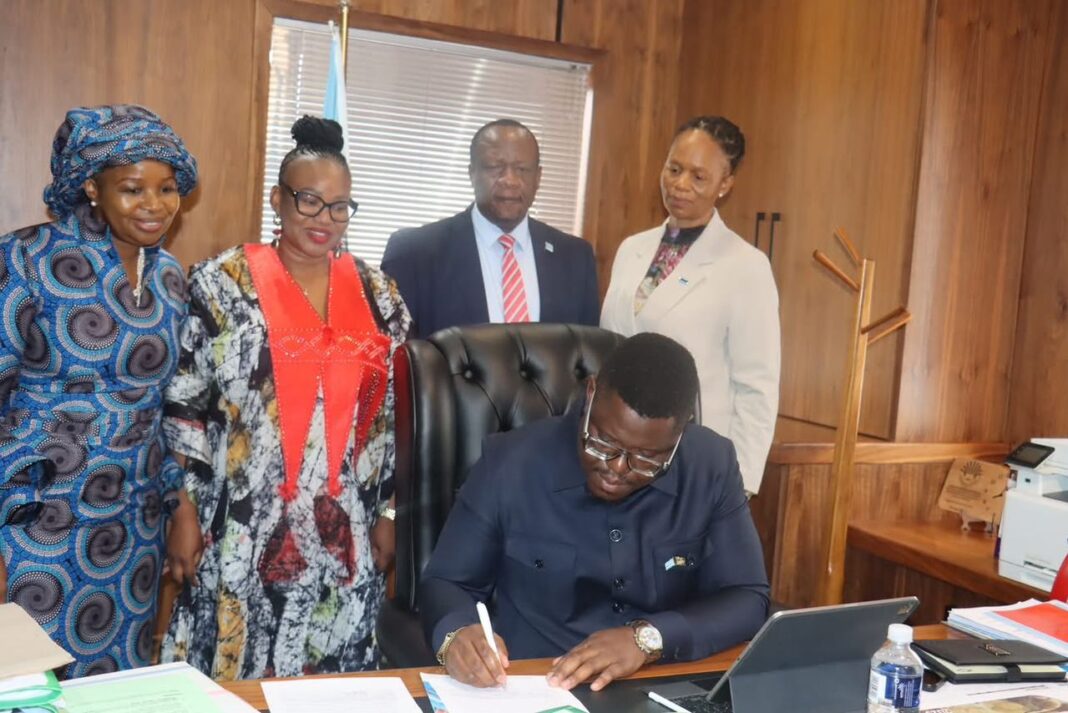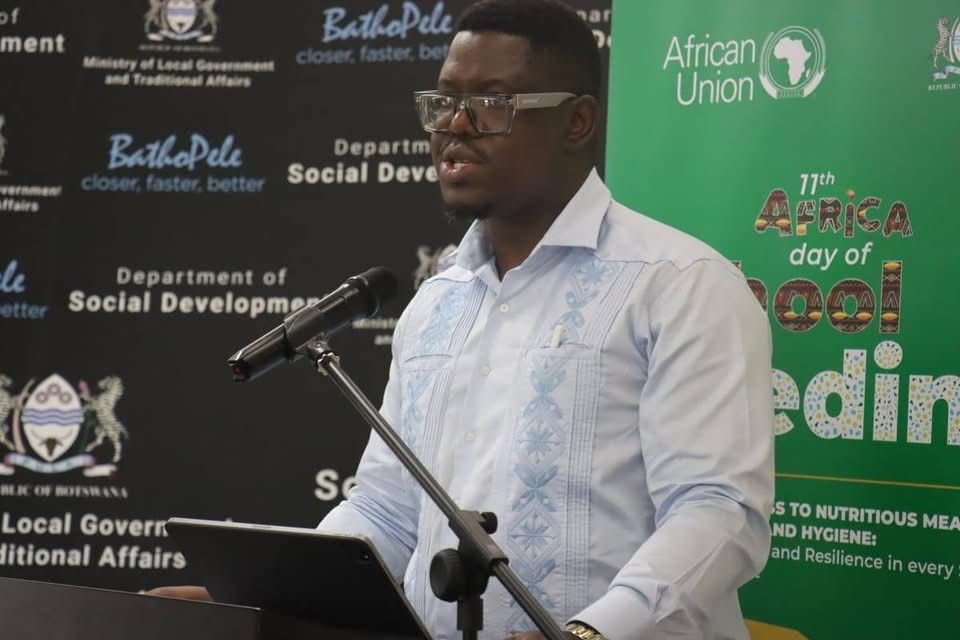

When addressing governments, international organisations, and partners from other countries on school meal planning, Minister of Local Government and Traditional Affairs, Honourable Ketlhalefile FC Motshegwa, emphasised the importance of unity. He explained that the story of Botswana’s school feeding legacy is not the story of government alone, but of communities, partnerships, and every individual who has contributed to nourishing children and empowering the nation.
Since 1966, when the World Food Programme first supported schools and clinics in Botswana, the country has steadily built a nationally owned programme that today reaches every public primary school and health facility. From the modest beginnings of 71,546 learners in 251 schools, the programme now sustains daily meals for nearly 389,749 children across 773 schools. Minister stated that it is through the School Meals Coalition, which aligns Botswana with international partners such as WFP, AUDA-NEPAD, FAO, UNDP, Global Child Nutrition Forum (GCNF) and others to share best practices and scale innovations. He said this unity will also go a long way in building a future where no child learns on an empty stomach, where every community thrives, and where collective achievements inspire generations to come.
He said that globally, the coalition has expanded school meal coverage to nearly 466 million children in just four years, saying it is a testament to the transformative power of collective action.
Locally, Minister Motshegwa highlighted how partnering with the Botswana Meat Commission, Botswana Agricultural Marketing Board, small-scale farmers, millers, food processors, academia, and other Ministries has also proved to be effective and vital when it comes to school feeding and meal plans. He said the partnerships have created thousands of jobs for cooks, cleaners, millers, fumigators, hand-stampers, and local small-scale farmers reinforcing the principle that development must be inclusive and community – driven.
Minister Motshegwa noted that initiatives such as letlhafula, hand-stamping sorghum, and integrating local produce have ensured that school feeding is not charity, but a driver of local economies and empowerment. In 2019, breakfast meals to all primary schools was introduced, as well as a third meal for 29,000 pupils in remote areas, an innovation which has linked classrooms to farms, children’s wellbeing to farmers’ livelihoods, and nutrition to entrepreneurship and agricultural production.
Minister Motshegwa informed the representatives that the government is preparing to introduce transformative activities within the Primary School Feeding Programme, including: expansion of Home-Grown School Feeding models, sourcing directly from community farmers, enhanced nutrition education, empowering learners with lifelong knowledge of healthy living e.g fish farming, resuscitating school gardens, capacity-building initiatives for cooks, caterers, and suppliers, raising quality standards while creating skilled jobs as well as menu diversification with nutrient-rich local foods such as lebelele, phane, morogo wa dinawa, madila, seswaa, goat, chicken, bogobe jwa lerotse, fish, and more fresh vegetables and fruits reinforcing dietary diversity and cultural heritage. Stating that the planned activities will not only sustain gains but will also create new opportunities for employment, innovation, and empowerment. They will ensure that programmes remain robust, visionary, and aligned with national priorities and international commitments.
Guided by recommendations from NEPAD, PCD, and WFP, Botswana transitioned from supplementary to full feeding of pre – and primary school learners.
The meeting was also attended by the Paramount Chief of Bamalete, Kgosi Mosadi Seboko, Deputy Permanent Secretary – Operations Mr Kabo Moseki and senior government officials.