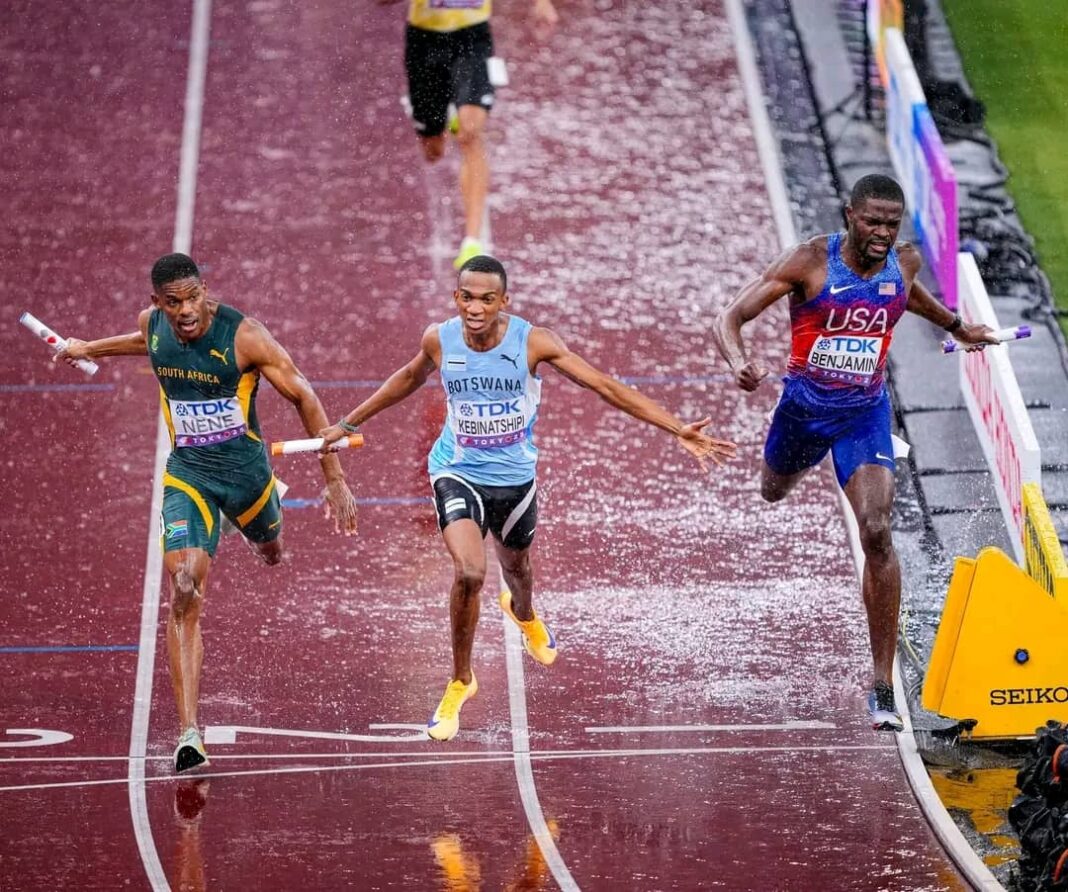

The National Stadium in Gaborone transformed into a cathedral of speed today as the World Athletics Relays 2026 kicked off under a golden Botswana sun. The atmosphere was electric, charged with the rhythmic chanting of thousands of local fans who witnessed a day where the history books weren’t just opened, but entirely rewritten. The headline of the afternoon belonged to Jamaica’s mixed 4x100m relay team, who executed a masterclass in baton handling and raw power to shatter the world record. With a breathtaking time of 39.99s, they became the first quartet in history to dip under the forty-second barrier in this event, reclaiming the global mark only an hour after Canada had briefly lowered it in an earlier heat.
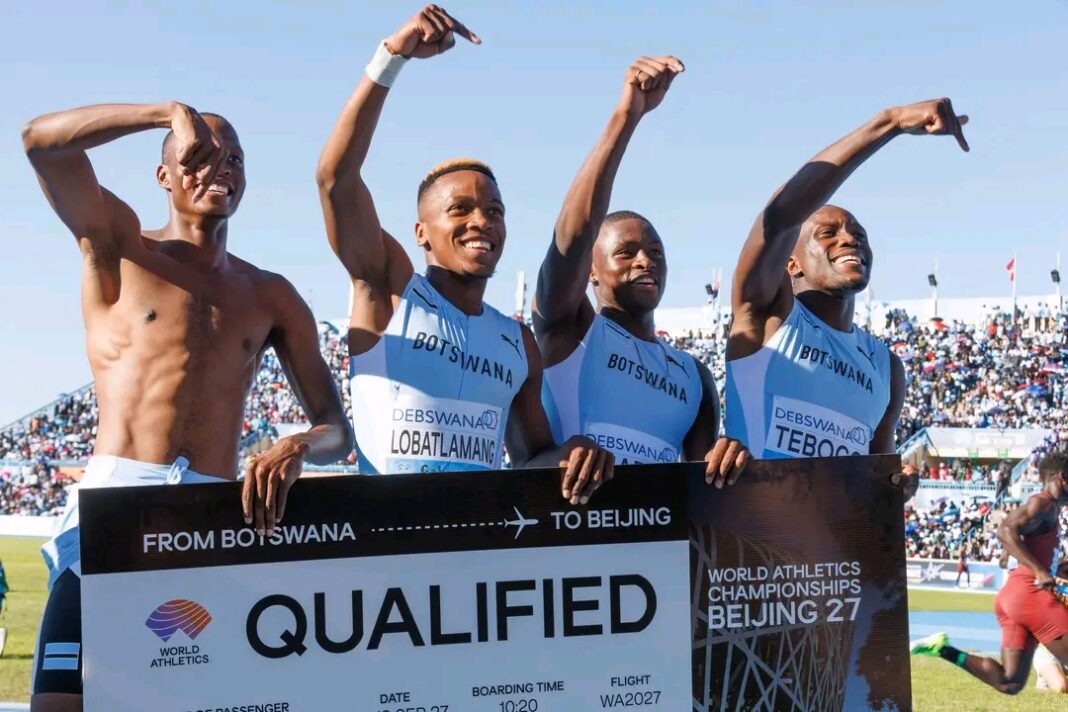
While the world record stole the international spotlight, the roar that greeted the Men’s 4x100m heats was unlike anything heard in African athletics for years. Botswana’s quartet, anchored by the legendary Letsile Tebogo, delivered a performance for the ages. Coming off the bend, Tebogo seemed to find an extra gear fueled by the home crowd, surging forward to secure a second-place finish in their heat behind a powerhouse United States team. This result was doubly historic, as it not only set a new national record of 37.96s but also officially punched Botswana’s ticket to the 2027 World Athletics Championships in Beijing. It marks the first time the nation has qualified for the sprint relay at that level, signaling a seismic shift in the continent’s sprinting hierarchy.
The path to Beijing was the primary objective for the sixty-odd nations gathered in Gaborone, and the drama did not disappoint. The qualification system—which rewards the top two finishers in each heat with a direct flight to China next year—created a series of “races within a race.” Canada’s men looked particularly formidable, with veteran Andre De Grasse showing his characteristic composure to lead his team to the fastest qualifying time of the day. Meanwhile, the USA continued its tradition of depth, qualifying across all five relay disciplines, though they were pushed to the limit in the Women’s 4x100m by a rejuvenated British squad and a highly disciplined Chinese team that looked very much at home on the fast Gaborone track.
Beyond the powerhouses, the day was filled with poignant narratives of progress. India’s women made a significant statement by competing in their first-ever World Relays, finishing with a respectable time that keeps their Beijing dreams alive through the secondary qualification rankings. South Africa also reminded the world of their relay pedigree, with Akani Simbine anchoring his team to a time that matched the Europeans and set up a mouth-watering final for tomorrow. As the sun set over the stadium, the conversation was no longer just about who won, but about how the “Gaborone Express” track has proven itself to be one of the fastest surfaces on the planet, setting the stage for even more records to fall in the upcoming finals.