
Democracy has never been a quiet exercise. From its earliest expressions, it has been forged through questioning, engagement, and the willingness of those in authority to submit themselves to scrutiny. In ancient Athens, Socrates did not teach by issuing proclamations; he taught by engaging, probing, and inviting challenge. His dialogues, Euthyphro, Crito, and Apology, were not abstract philosophical exercises, but serious interrogations of law, justice, authority, and obedience.
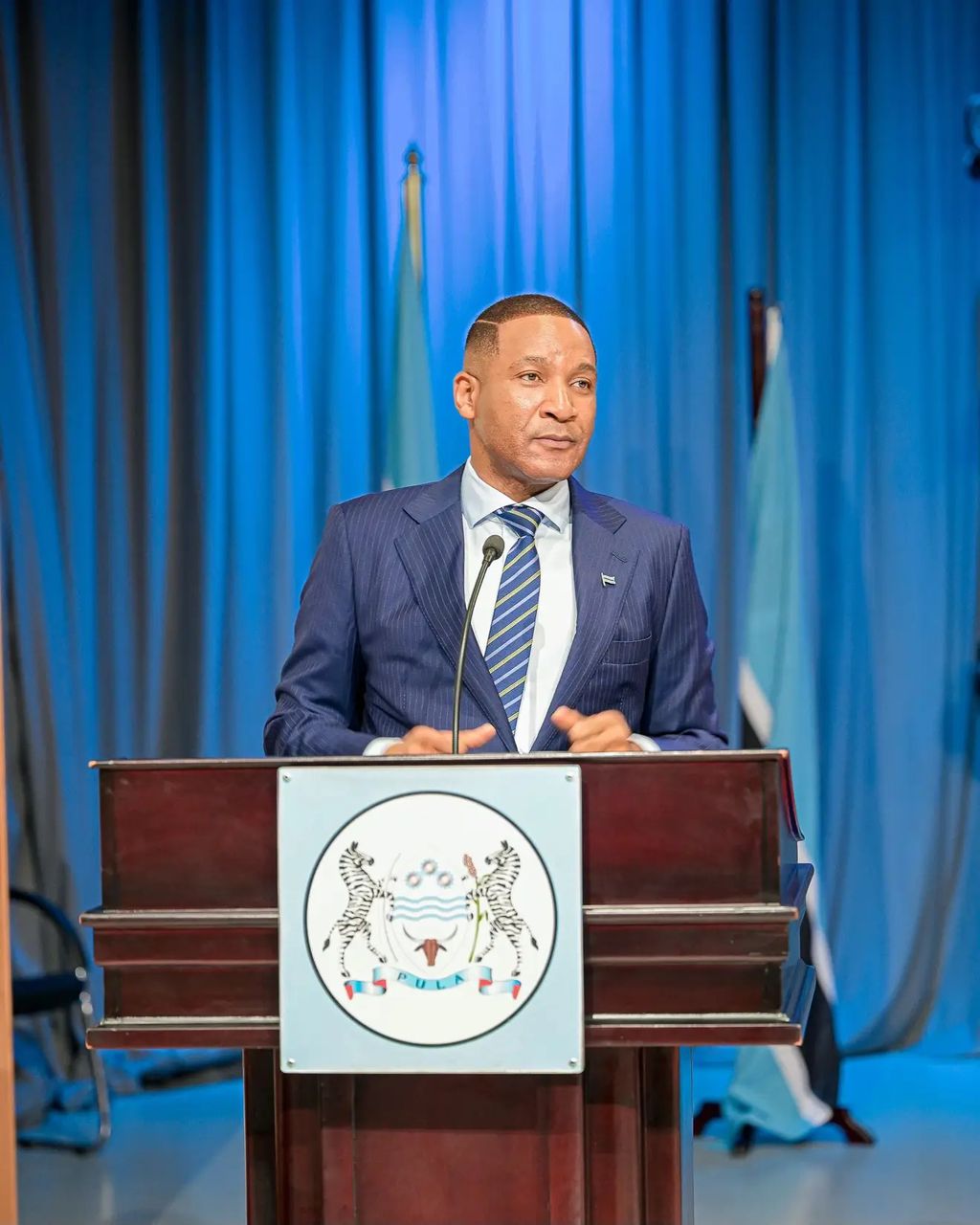
These same questions surfaced during President Advocate Duma Gideon Boko’s engagement with Ntlo ya Dikgosi on constitutional reform and the establishment of a Constitutional Court.
In Euthyphro, Socrates asks a deceptively simple question: what makes something just? Is it just because authority declares it so, or because it is grounded in deeper principles? The dialogue remains relevant today. When governments embark on constitutional reform, legitimacy cannot arise merely from legal power; it must be rooted in public understanding, cultural legitimacy, and moral authority.
It is for this reason that President Boko’s distinction between constitutional review and the establishment of a Constitutional Court was both deliberate and important.
On constitutional review, the President stated that his government will deliver a comprehensive and participatory process, beginning with public education. Before any amendment is proposed, Batswana must first understand the Constitution, its history, its values, and its implications. Like Socrates, who insisted that citizens must first understand virtue before claiming to practice it, the President recognised that constitutional reform without civic understanding risks becoming hollow.
The Dikgosi agreed. They emphasised the importance of educating the nation before embarking on amendments and commended the President for treating the Constitution not as a political instrument, but as a national covenant. They further called for more engagements of this nature, affirming the central role of Ntlo ya Dikgosi in safeguarding Botswana’s democratic culture.
On the question of the Constitutional Court, the discussion moved from what the law is to how justice is delivered. In Apology, Socrates warns against systems that value procedure over truth. President Boko echoed this concern in modern form. While the High Court has constitutional jurisdiction, he noted that constitutional matters are often defeated by procedural technicalities. Moreover, High Court judges must adjudicate across criminal, civil, and commercial matters, without the benefit of a specialised constitutional focus.
A Constitutional Court, staffed by judges trained specifically in constitutional law, would allow disputes to be resolved substantively rather than technically. Such a court would be better equipped to address complex issues such as pre-existing rights, indigenous peoples’ rights, and emerging constitutional claims that require doctrinal depth and sensitivity.
In Crito, Socrates confronts one of the most difficult democratic questions: when should authority be obeyed, and when must it justify itself? He ultimately submits to the law, but only after engaging it, questioning it, and ensuring that obedience is grounded in reason rather than fear.
This spirit of reasoned engagement was evident when the Dikgosi raised concerns about process, specifically that they should have been consulted before the proposal was developed into a Bill. Rather than retreating behind executive authority, President Boko acknowledged the concern without qualification, offered an apology, and reaffirmed that meaningful reform must respect institutions, tradition, and inclusive dialogue. He further assured Ntlo ya Dikgosi that consultations would continue nationwide and that Batswana, through broader consultation and possible referendum, would have the final say.
The engagement also ventured into broader societal questions, including corporal punishment, polygamy, go becha, and evolving social norms. These discussions mirror the Socratic method itself: probing assumptions, testing values, and recognising that law does not exist in isolation from culture.
What made this engagement historic was not merely the proposals on the table, but the manner of leadership displayed. By subjecting executive ideas to traditional authority, public reasoning, and open questioning, President Boko demonstrated a mature constitutionalism, one that understands that the strength of law lies not in coercion, but in consent.
Like Socrates’ Athens, Botswana’s democracy is strengthened when power listens, when institutions engage one another with respect, and when reform is pursued through dialogue rather than decree. In this moment, constitutional reform in Botswana was not only discussed; it was practised.