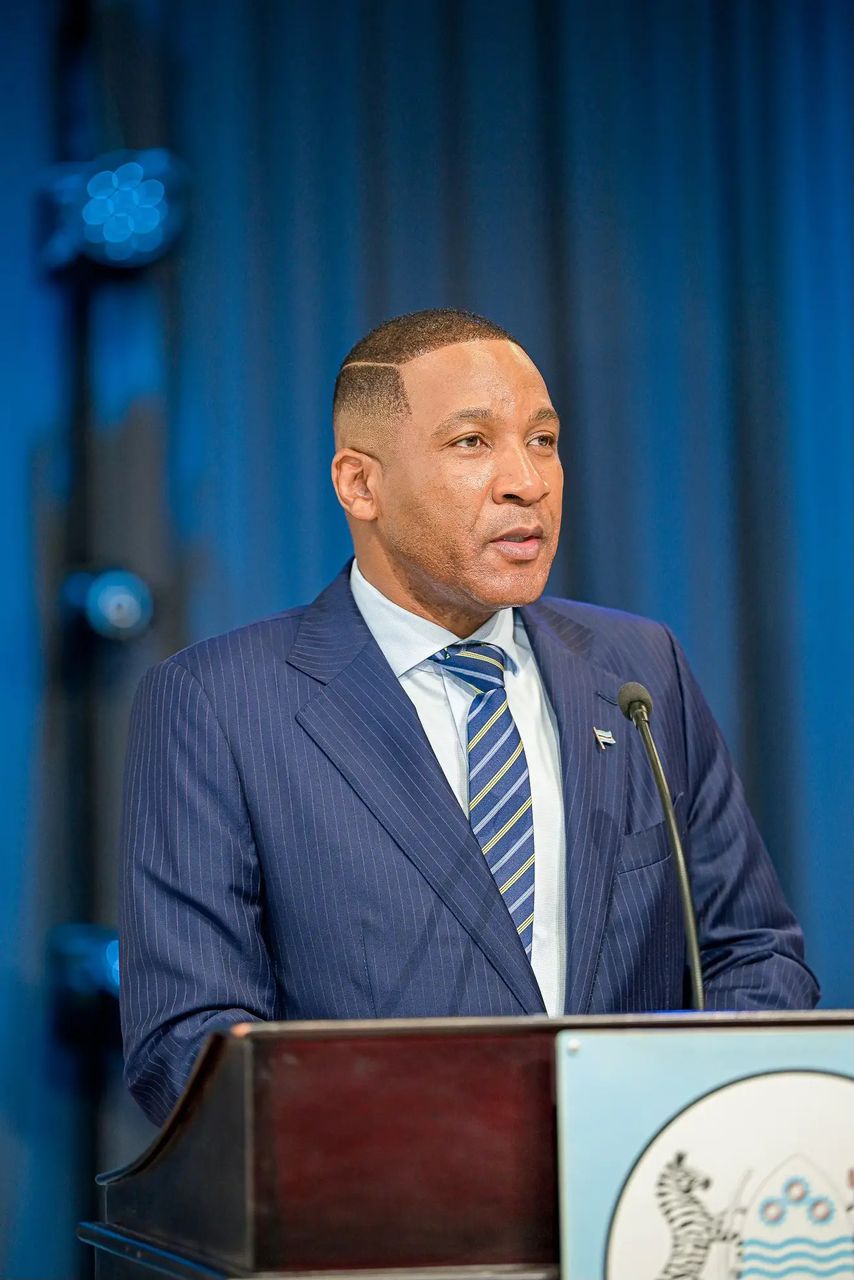

To the casual observer scrolling through social media, the aftermath of a public address by President Duma Boko often looks like chaos. Timelines erupt in debate, clips are dissected, and arguments flare in comment sections. But to dismiss this as mere digital noise is to miss the strategic intent of the man behind the podium.
President Boko’s rhetorical style is not an accident of personality; it is a feature of his pedigree. He speaks not merely as a politician, but as a debater, a lecturer, and a Senior Counsel. His addresses are not designed to pacify—they are designed to provoke.
Unlike typical political populism, which often seeks to soothe the electorate with platitudes or mirror their existing biases, Boko’s approach is dialectic. His thought process demands engagement. It forces the listener to perform a complex mental act: hearing the speaker’s proposition, contrasting it against their own internal belief system, and wrestling with the dissonance.
This friction is the point. It results in a “more perfected form of thought.” By challenging the public intellect, the President is stripping away the passivity that often plagues established democracies. As he has noted in his own words, he desires a public that is “engaged and sometimes enraged.”
Why would a leader want an enraged public? Because comfort breeds complacency, and complacency is the enemy of the task ahead.
Botswana is standing on the precipice of a monumental shift: a comprehensive constitutional review. A passive citizenry—one that accepts ideas without chewing on them—is ill-equipped for this duty. If the public’s views on critical issues have not been crystallised through the heat of debate, the resulting constitution will be a hollow document. By fostering an environment of intense engagement, the President is accelerating the cultural, social, and moral growth necessary to birth a true “Second Republic.”
This is the long game. The “online noise” is actually the sound of a nation defining its identity, evolving away from the inherited independence constitution crafted by the British at the end of the protectorate. That document served its purpose for a young nation, but a matured Botswana requires a jurisprudence that reflects its own evolved soul.
When these debates eventually come to a head—as they inevitably will—they will move from the court of public opinion to a court of law. The ultimate aim is a Constitutional Court led by legal experts of the highest calibre and addressed by advocates of equal standing. It is in that crucible, fueled by a populace that has debated the issues threadbare, that a new, indigenous jurisprudence will be forged.
President Boko is not just making speeches; he is preparing the jury. He is training the public mind for the heavy lifting of statecraft, ensuring that when the Second Republic is codified, it is done not by sleepwalkers, but by a people fully awake.