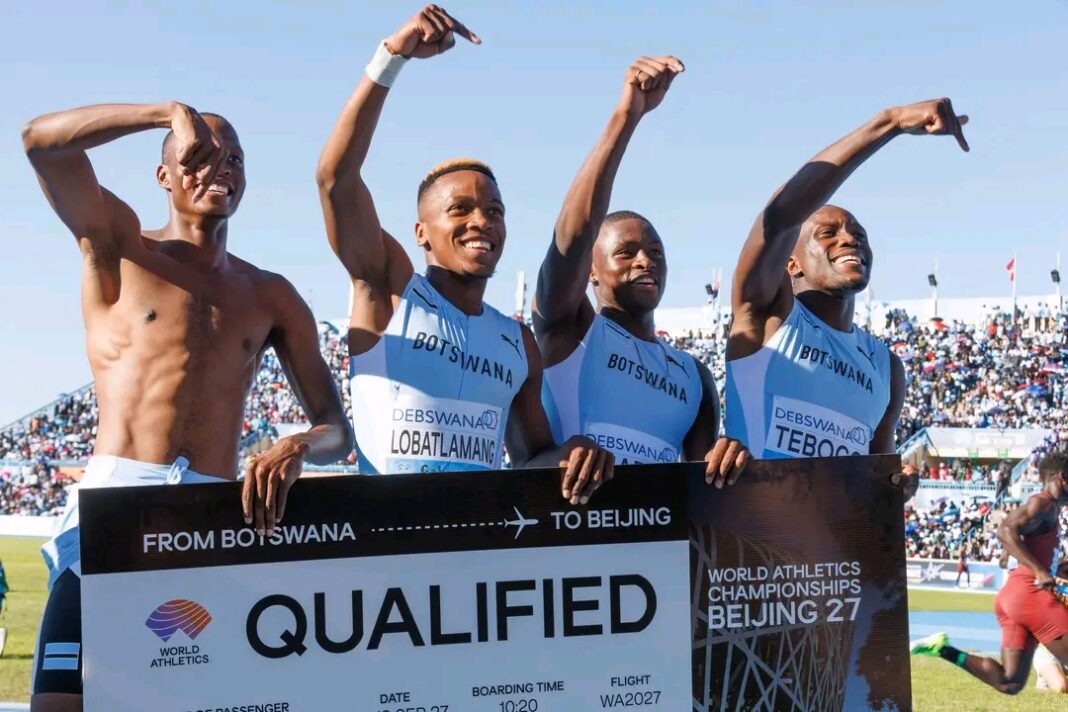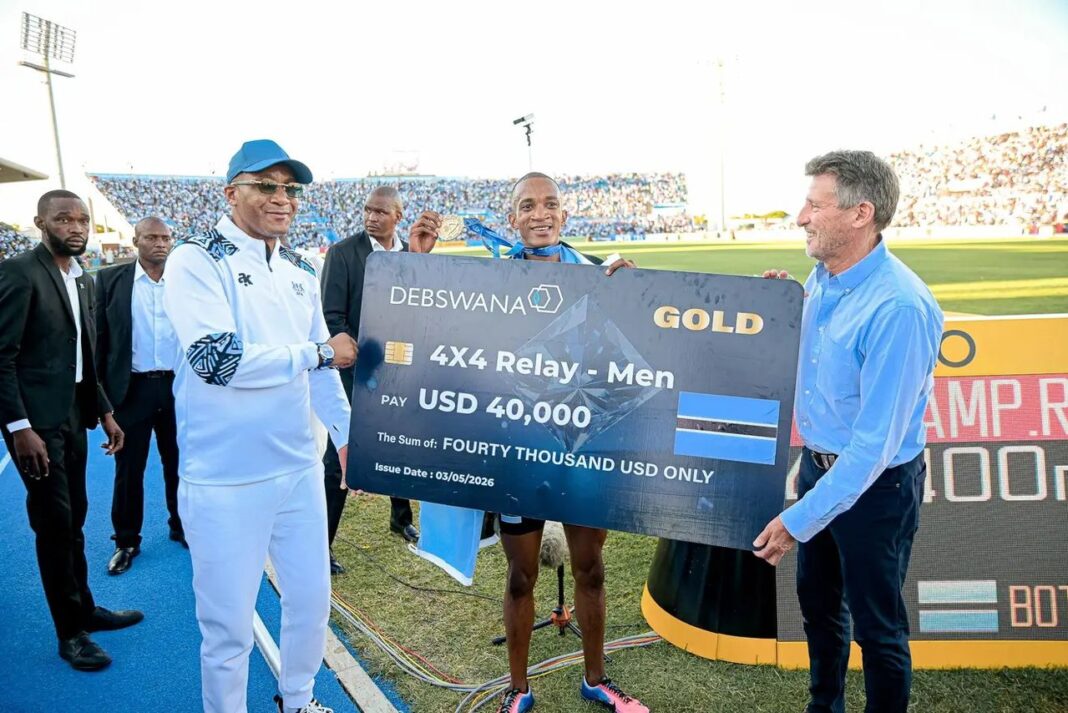

The roar that echoed through the Gaborone National Stadium yesterday was not just one of celebration, but of a continent claiming its place at the pinnacle of global athletics. As the curtains fell on the World Athletics Relays 2026, the final day transcended mere competition, evolving into a historic festival of speed where the boundaries of human performance were pushed further than ever before. While the qualification tickets to Beijing were the focus of the opening day, Sunday was about dominance, and no team embodied that spirit more than the host nation’s Men’s 4x400m quartet. In a breathtaking display of tactical brilliance and raw endurance, Botswana’s golden boys delivered a masterclass in front of an adoring home crowd, storming to victory and proving that they are the undisputed kings of the one-lap relay.
The stadium’s electricity reached a fever pitch as the legendary Elaine Thompson-Herah made her triumphant golden return to the international stage. Anchoring a stacked Jamaican Women’s 4x100m team, she looked every bit the sprint queen, gliding across the Gaborone track to secure a victory that felt like a restoration of the natural order. But Jamaica’s hunger for history didn’t stop there. Having already set the world record in the mixed relay on Saturday, the island nation celebrated an incredible haul of medals yesterday, cementing their status as the ultimate powerhouse of the meet. Their technical precision in the baton exchanges was a stark contrast to the chaos of the chasing pack, leaving no doubt that they remain the gold standard heading into next year’s World Championships in Beijing.
Not to be outdone, the United States asserted their traditional depth, emerging as the biggest winners alongside Jamaica with two major event victories during the final session. The American men showed clinical efficiency in the 4x100m final, navigating the tricky transitions that often plague relay teams to claim a decisive gold. Their performance was a statement of intent, reminding the world that while individual superstars may rise elsewhere, the collective strength of the American sprint program remains a formidable wall to climb. Meanwhile, Norway provided one of the biggest surprises of the championships, snatching a gold that shook the traditional sprinting hierarchy and added to the weekend’s tally of historic firsts.
Beyond the medal podium, the lasting legacy of the meet is the “Gaborone Effect.” The track proved itself to be a lightning-fast surface, conducive to the flurry of national and continental records that fell over the last forty-eight hours. As the sun set yesterday, the final standings reflected a new world order where African nations are no longer just participants but dominant forces in the relay disciplines. From India’s historic debut in the women’s sprints to the surging confidence of the South African and Canadian teams, the road to Beijing now runs through Botswana. The 2026 World Relays didn’t just end yesterday; they began a new chapter in athletics history, one where the heart of the sport beats loudest in Gaborone.